Blog › Medical billing

Guide · Medical billing software

Top Software Tools Used for Medical Billing Services

Medical billing software has become an essential part of modern healthcare administration. It helps healthcare providers manage patient billing, submit insurance claims, track payments, and maintain accurate financial records.

✍️ Medical Coding Masters editorial team

Prefer a guided path?

Our trainers help you build the skills that lead to a better first offer. Sit in on a class for free.

Book a free demo
Top Software Tools Used for Medical Billing Services

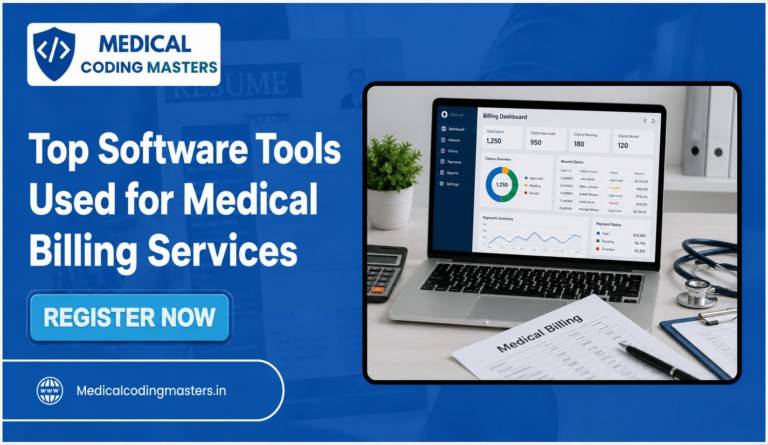
Top Software Tools Used for Medical Billing Services

Introduction

Medical billing software has become an essential part of modern healthcare administration. It helps healthcare providers manage patient billing, submit insurance claims, track payments, and maintain accurate financial records. 

By automating routine administrative tasks, these systems improve operational efficiency and reduce billing errors.

Whether you’re planning to build a career in medical billing or simply want to understand how healthcare organizations manage their revenue cycle, learning about the most widely used medical billing software can give you valuable industry knowledge. 

In this guide, we’ll explore the leading medical billing solutions, their key features, and how they support healthcare professionals in their daily work.

What Is Medical Billing Software?

Medical billing software is a digital solution that helps healthcare organizations create patient invoices, process insurance claims, monitor reimbursements, and manage payment records. 

It simplifies administrative tasks by organizing billing information in one place and reducing the need for manual paperwork.

Many medical billing platforms also integrate with Electronic Health Records (EHR) and Practice Management Systems (PMS), allowing healthcare providers to manage patient information, appointments, billing, and claims through a single system.

Medical billing software is commonly used to:

  • Generate patient bills and invoices
  • Submit insurance claims electronically
  • Track claim status and reimbursements
  • Maintain billing records
  • Manage payment history
  • Reduce manual billing errors
  • Improve revenue cycle management
  • Using the right software helps healthcare organizations improve billing accuracy, enhance workflow efficiency, and streamline financial operations.

Like what you see so far?

Attend a free live demo class with our trainers before you decide.

Why Is Medical Billing Software Important?

Efficient billing is an essential part of healthcare administration. Medical billing software helps healthcare organizations manage financial processes accurately while reducing administrative workload. 

By automating routine billing tasks, these systems improve claim accuracy, minimize delays, and support timely reimbursement.

In addition to simplifying billing operations, medical billing software provides better visibility into payment status, claim history, and financial performance. 

This allows healthcare providers to focus more on patient care while maintaining organized billing records.

Benefits of Medical Billing Software:

  • Improves billing accuracy
  • Reduces manual data entry
  • Speeds up insurance claim processing
  • Simplifies payment tracking
  • Supports revenue cycle management
  • Generates financial reports
  • Enhances workflow efficiency
  • Helps maintain organized billing records.

How Medical Billing Software Simplifies the Billing Process

Medical billing involves multiple administrative tasks, including verifying patient information, preparing insurance claims, tracking payments, and maintaining financial records. 

Managing these activities manually can be time-consuming and increase the risk of errors. Medical billing software helps streamline these processes by organizing billing workflows and automating routine tasks.

By reducing repetitive manual work, healthcare organizations can improve efficiency, maintain accurate billing records, and focus more on delivering quality patient care.

How Medical Billing Software Supports Daily Operations:

1. Organizes Patient Billing Information

Medical billing software stores patient billing details in a centralized system, making it easier to access invoices, payment history, and insurance information whenever required.

2. Simplifies Insurance Claim Submission

Instead of preparing claims manually, billing professionals can generate and submit electronic claims more efficiently. This helps reduce paperwork and speeds up communication with insurance providers.

3. Tracks Claim Status

The software allows users to monitor submitted claims, identify pending approvals, and follow up on rejected claims. This improves visibility throughout the reimbursement process.

4. Manages Payment Records

Medical billing software records patient payments, insurance reimbursements, and outstanding balances, helping healthcare organizations maintain accurate financial documentation.

5. Reduces Administrative Work

Automation features help minimize repetitive tasks such as invoice generation, payment reminders, and report creation, allowing staff to focus on higher-value responsibilities.

6. Supports Better Financial Reporting

Most billing platforms generate detailed reports on collections, reimbursements, outstanding claims, and revenue trends. These reports help healthcare organizations monitor financial performance and make informed decisions.

Benefits at a Glance

Billing TaskHow the Software Helps
Patient InformationOrganizes billing records
Insurance ClaimsSimplifies electronic claim submission
Claim TrackingMonitors reimbursement status
Payment ManagementRecords payments and outstanding balances
Administrative TasksAutomates routine workflows
Financial ReportsProvides business insights

Key Takeaway

Medical billing software goes beyond creating invoices. It supports every stage of the billing workflow by organizing information, automating repetitive tasks, and improving the overall efficiency of healthcare billing operations.

Top Software Used for Medical Billing Services

Healthcare organizations use a variety of medical billing software solutions to manage patient billing, process insurance claims, monitor reimbursements, and improve revenue cycle management. 

Each platform offers unique features designed to meet the needs of hospitals, clinics, specialty practices, and healthcare providers.

Below are some of the most widely used medical billing software solutions in the healthcare industry.

1. Kareo Billing

Kareo Billing is a cloud-based medical billing solution designed primarily for independent practices and small healthcare organizations. It helps simplify billing workflows by managing patient invoices, insurance claims, payment tracking, and financial reporting from a single platform.

Key Features

  • Electronic claim submission
  • Insurance eligibility verification
  • Payment tracking
  • Revenue cycle management
  • Financial reporting dashboard

Best suited for: Small healthcare practices and independent clinics.

2. AdvancedMD

AdvancedMD combines medical billing, practice management, scheduling, and electronic health records into one integrated platform.

 Its automation features help healthcare providers improve billing accuracy and reduce administrative workload.

Key Features

  • Automated claim management
  • Appointment scheduling
  • Billing analytics
  • EHR integration
  • Revenue reporting

Best suited for: Multi-specialty clinics and medium-sized healthcare organizations.

3. AthenaCollector (athenahealth)

AthenaCollector is a cloud-based revenue cycle management solution developed by athenahealth. 

It helps healthcare providers submit claims, monitor reimbursements, reduce claim denials, and improve overall billing performance.

Key Features

  • Claims management
  • Automated payment posting
  • Revenue cycle analytics
  • Denial management
  • Insurance claim tracking

Best suited for: Hospitals, specialty clinics, and physician practices.

4. DrChrono

DrChrono is an all-in-one healthcare management platform that combines medical billing, electronic health records, patient scheduling, and practice management tools. 

It is known for its mobile-friendly interface and customizable workflows.

Key Features

  • Mobile billing platform
  • EHR integration
  • Appointment management
  • Insurance claim processing
  • Patient billing

Best suited for: Small and medium-sized medical practices.

5. NextGen Healthcare

NextGen Healthcare provides comprehensive billing and practice management solutions for healthcare providers across multiple specialties. The platform focuses on improving financial performance while supporting efficient healthcare operations.

Key Features

  • Medical billing
  • Revenue cycle management
  • Claims tracking
  • Financial analytics
  • Practice management

Best suited for: Specialty clinics and growing healthcare organizations.

6. eClinicalWorks

eClinicalWorks is widely recognized for its electronic health record system, but it also offers integrated medical billing features. The software supports healthcare organizations by streamlining billing workflows and improving claim accuracy.

Key Features

  • Integrated billing
  • EHR connectivity
  • Patient management
  • Claims submission
  • Revenue reporting

Best suited for: Hospitals, physician groups, and outpatient practices.

7. CareCloud

CareCloud offers cloud-based medical billing and revenue cycle management solutions designed to simplify healthcare administration. The platform includes automation features that improve billing efficiency and reduce manual work.

Key Features

  • Cloud billing
  • Claims management
  • Payment tracking
  • Revenue analytics
  • Practice management

Best suited for: Healthcare practices seeking cloud-based billing solutions.

8. PracticeSuite

PracticeSuite combines medical billing, scheduling, electronic health records, and patient management into one platform. It supports healthcare providers by automating billing workflows and improving financial reporting.

Key Features

  • Medical billing
  • Appointment scheduling
  • Revenue management
  • Claims processing
  • Reporting tools

Best suited for: Independent practices and specialty clinics.

Quick Comparison Table

Software

Best For

Cloud-Based

Key Strength

Kareo Billing

Small clinics

✅

Easy billing workflow

AdvancedMD

Multi-specialty practices

✅

Practice management integration

AthenaCollector

Hospitals & physician groups

✅

Revenue cycle management

DrChrono

Mobile healthcare practices

✅

Mobile accessibility

NextGen Healthcare

Specialty clinics

✅

Financial analytics

eClinicalWorks

Hospitals & outpatient centers

✅

EHR integration

CareCloud

Growing healthcare practices

✅

Cloud-based billing

PracticeSuite

Independent practices

✅

Billing and scheduling

Key Takeaway

Medical billing software helps healthcare organizations manage billing operations more efficiently by automating insurance claims, payment tracking, and revenue management. 

While each platform offers different capabilities, they all aim to improve billing accuracy, reduce administrative effort, and support better financial outcomes.

Planning a career in medical coding or medical billing?

Understanding how these software platforms work can help you build practical knowledge and prepare for roles in the healthcare industry.

Need help choosing a path?

Talk to a counsellor about batches, fees and certification.

How to Choose the Right Medical Billing Software

Selecting the right medical billing software is an important decision for healthcare organizations because it directly impacts billing accuracy, claim processing, and overall workflow efficiency. 

Since every healthcare facility has different operational requirements, the ideal solution should match the organization’s size, specialty, budget, and long-term goals.

When evaluating medical billing software, focus on features that simplify daily tasks, improve data accuracy, and support smooth communication between healthcare providers, patients, and insurance companies.

Factors to Consider When Choosing Medical Billing Software:

1. Ease of Use

The software should have a user-friendly interface that allows billing professionals to complete tasks efficiently with minimal learning time. Simple navigation can improve productivity and reduce errors.

2. Claims Management

Choose software that supports electronic claim submission, claim tracking, and denial management. These features help streamline billing processes and improve reimbursement timelines.

3. Integration with Healthcare Systems

Medical billing software should integrate with Electronic Health Records (EHR) and Practice Management Systems (PMS). Integration reduces duplicate data entry and improves workflow across departments.

4. Security and Compliance

Healthcare organizations manage sensitive patient information every day. The software should include strong security measures and support compliance with healthcare data privacy regulations.

5. Reporting and Analytics

Comprehensive reporting tools help healthcare providers monitor financial performance, identify billing trends, and make informed operational decisions.

6. Customer Support

Reliable technical support and regular software updates are important for resolving issues quickly and ensuring uninterrupted billing operations.

Checklist for Selecting Medical Billing Software

Before making a decision, consider whether the software offers:

  • Easy-to-use interface
  • Electronic claims processing
  • EHR and PMS integration
  • Secure patient data management
  • Reporting and analytics tools
  • Revenue cycle management features
  • Reliable customer support
  • Scalability for future growth

Choosing software with these capabilities can help healthcare organizations improve billing accuracy, simplify administrative tasks, and support efficient financial management.

Key Takeaway

There is no single medical billing software that is ideal for every healthcare organization. The best choice depends on factors such as the size of the practice, operational needs, available budget, and required features. 

Understanding these considerations can help healthcare professionals and organizations make informed decisions when selecting a billing solution.

Skills Needed to Work with Medical Billing Software

Medical billing software makes administrative tasks more efficient, but using these platforms effectively also requires the right combination of technical knowledge and professional skills. 

Billing professionals should understand healthcare documentation, insurance processes, and software workflows to ensure accurate billing and timely claim submission.

Developing these skills can improve productivity, reduce billing errors, and help professionals adapt to different healthcare software systems used across hospitals and clinics.

Essential Skills for Medical Billing Professionals:

1. Basic Computer Proficiency

Medical billing professionals work with cloud-based platforms, digital records, and online claim submission systems. Comfortable use of computers and common office applications helps improve daily efficiency.

2. Knowledge of Medical Terminology

Understanding medical terms, diagnoses, procedures, and anatomy helps professionals interpret healthcare documentation correctly and prepare accurate billing information.

3. Familiarity with Medical Coding Systems

Although medical billing and medical coding are different functions, a basic understanding of coding systems such as ICD-10-CM, CPT, and HCPCS Level II helps ensure billing accuracy and proper claim processing.

4. Attention to Detail

Even small inaccuracies in billing information can lead to claim rejections or payment delays. Careful review of patient records and billing data helps maintain accuracy throughout the billing process.

5. Understanding Insurance Claims

Medical billing professionals should understand the claim submission process, reimbursement procedures, insurance verification, and claim follow-up to manage billing tasks efficiently.

6. Communication Skills

Billing professionals often interact with healthcare providers, insurance companies, and patients. Clear communication helps resolve billing questions and supports smooth coordination between different departments.

7. Problem-Solving Ability

Insurance claim denials and billing discrepancies may require investigation and corrective action. Strong analytical and problem-solving skills help professionals identify issues and find appropriate solutions.

8. Continuous Learning

Healthcare regulations, billing standards, and software technologies continue to evolve. Staying updated with industry developments helps professionals maintain their knowledge and adapt to changing workplace requirements.

Why These Skills Matter

Medical billing software is only one part of the billing process. Building a strong fedge combined with professional skills enables medical billing professionals to work confidently with modern billing software. 

These abilities contribute to accurate documentation, efficient claim processing, and effective healthcare administration while supporting long-term career development.

Key Skills at a Glance

Technical Skills

Professional Skills

Medical billing software

Communication

Medical terminology

Attention to detail

ICD-10-CM basics

Problem-solving

CPT basics

Time management

HCPCS Level II basics

Adaptability

Insurance claim processing

Continuous learning

Computer proficiency

Teamwork

Key Takeaway 

Foundation in healthcare terminology, billing procedures, coding basics, and workplace skills helps professionals use these tools effectively and contribute to accurate healthcare administration.

Future of Medical Billing Software

The healthcare industry continues to adopt digital technologies to improve patient care and administrative efficiency. 

As healthcare organizations handle increasing volumes of patient data and insurance claims, medical billing software remains an important tool for managing financial operations accurately and efficiently.

Modern billing platforms now include automation, cloud-based access, and advanced reporting features that help healthcare providers simplify routine tasks while maintaining organized billing records. 

As technology continues to evolve, professionals who understand both medical billing processes and software applications will be better prepared to work in technology-driven healthcare environments.

Emerging Trends in Medical Billing Software:

1. Artificial Intelligence (AI)

Many healthcare software providers are incorporating AI-powered features to assist with claim validation, error detection, and workflow automation. While AI can support repetitive tasks, human expertise remains essential for reviewing complex cases and ensuring billing accuracy.

2. Cloud-Based Solutions

Cloud technology allows healthcare professionals to securely access billing systems from different locations, improving collaboration and making software updates easier to manage.

3. Automation of Routine Tasks

Automation helps reduce manual data entry by assisting with claim submission, payment tracking, appointment reminders, and report generation. This enables billing professionals to focus on tasks that require analysis and decision-making.

4. Improved Data Analytics

Advanced reporting tools provide healthcare organizations with valuable insights into claim status, revenue performance, billing trends, and operational efficiency, supporting better business decisions.

5. Enhanced Security Measures

As healthcare organizations continue to protect sensitive patient information, medical billing software is evolving with stronger security features such as encrypted data storage, secure user authentication, and controlled system access.

Why Continuous Learning Matters

Technology continues to shape healthcare administration, making continuous learning an important part of career development. 

Staying updated with new software features, industry practices, and healthcare regulations can help professionals adapt to workplace changes and maintain their skills over time.

Key Trends at a Glance

Industry Trend

How It Benefits Healthcare Organizations

Artificial Intelligence

Supports workflow automation and error detection

Cloud-Based Software

Enables secure access from multiple locations

Task Automation

Reduces manual administrative work

Data Analytics

Provides insights into billing performance

Enhanced Security

Protects sensitive healthcare information

Key Takeaway

Medical billing software continues to evolve alongside the healthcare industry. 

As digital technologies become more advanced, professionals who combine software knowledge with healthcare billing expertise will be better prepared to adapt to changing workplace requirements and contribute to efficient healthcare operations.

Ready to start learning?

The next batch starts on 1 November 2026.

STILL WONDERING?

Frequently Asked Questions (FAQs)

What is medical billing software?

Medical billing software is a digital application that helps healthcare organizations create patient bills, submit insurance claims, track reimbursements, and manage payment records. It simplifies billing workflows and improves administrative efficiency.

Who uses medical billing software?

Medical billing software is commonly used by medical billing professionals, hospitals, clinics, physician practices, diagnostic centers, and healthcare organizations to manage billing and insurance claim processes.

Is medical billing software different from medical coding software?

Yes. Medical coding software is primarily used to assign standardized codes to diagnoses and medical procedures, while medical billing software focuses on generating invoices, submitting insurance claims, tracking payments, and managing the revenue cycle. Although they serve different purposes, both are essential parts of the healthcare administration process.

What features should medical billing software include?

An effective medical billing solution should offer features such as:
• Electronic claim submission
• Payment tracking
• Insurance verification
• Revenue cycle management
• Reporting and analytics
• EHR integration
• Secure patient data management

Do medical billing professionals need coding knowledge?

Basic knowledge of medical coding systems such as ICD-10-CM, CPT, and HCPCS Level II is beneficial because billing professionals often work closely with coded healthcare documentation during claim processing.

Can beginners learn medical billing software?

Yes. Most medical billing software platforms are designed with user-friendly interfaces. With proper training and hands-on practice, beginners can gradually learn how to navigate billing systems and manage common administrative tasks.

Is cloud-based medical billing software better than desktop software?

Cloud-based solutions offer advantages such as remote access, automatic software updates, secure data storage, and easier collaboration. The most suitable option depends on the healthcare organization’s operational requirements and preferences.

Why is medical billing software important in healthcare?

Medical billing software helps healthcare organizations improve billing accuracy, streamline insurance claim processing, reduce administrative workload, and manage financial records more efficiently.
Conclusion

Medical billing software has become an essential component of modern healthcare administration, helping organizations manage patient billing, process insurance claims, and maintain accurate financial records. 

By automating routine tasks and improving workflow efficiency, these solutions support smoother day-to-day operations across hospitals, clinics, and healthcare practices.

Understanding how medical billing software works, its key features, and the skills required to use it can provide valuable insight for anyone interested in healthcare administration. 

Whether you are exploring career opportunities or expanding your knowledge of medical billing, familiarity with these tools helps you better understand the technology used throughout the healthcare industry.

If you are planning to build a career in medical coding or medical billing, developing a strong foundation in healthcare documentation, medical terminology, coding concepts, and industry-standard software can prepare you for the evolving demands of the healthcare sector.

Ready to Learn Medical Coding and Medical Billing?

A structured training program can help you understand healthcare documentation, medical coding systems, billing processes, and the software commonly used in healthcare organizations. 

Learning these practical skills can strengthen your knowledge and prepare you for professional opportunities in the healthcare industry.

Explore our Medical Coding Course to learn the fundamentals of medical coding, medical billing, and healthcare documentation through industry-focused training.

Enroll For Medical Coding Free Demo Class